
Polish capital is taking the initiative on the commercial real estate market
Polish capital is making its presence increasingly visible on the commercial real estate market in Poland. It is no longer merely a complement to the activity of foreign funds, but one of the drivers of the domestic investment market. Domestic investors are increasing the scale of their operations, expanding their strategic activity and reaching more boldly for top-class assets.
Just three years ago, Polish entities focused mainly on value-add properties, older assets offering potential for value growth through modernization, a change of function or income optimization. Today, a clear change in strategy can be seen. An increasing share of domestic capital is also being directed toward prime assets, which provide stable cash flows and long-term value growth potential.
Office properties are the main target
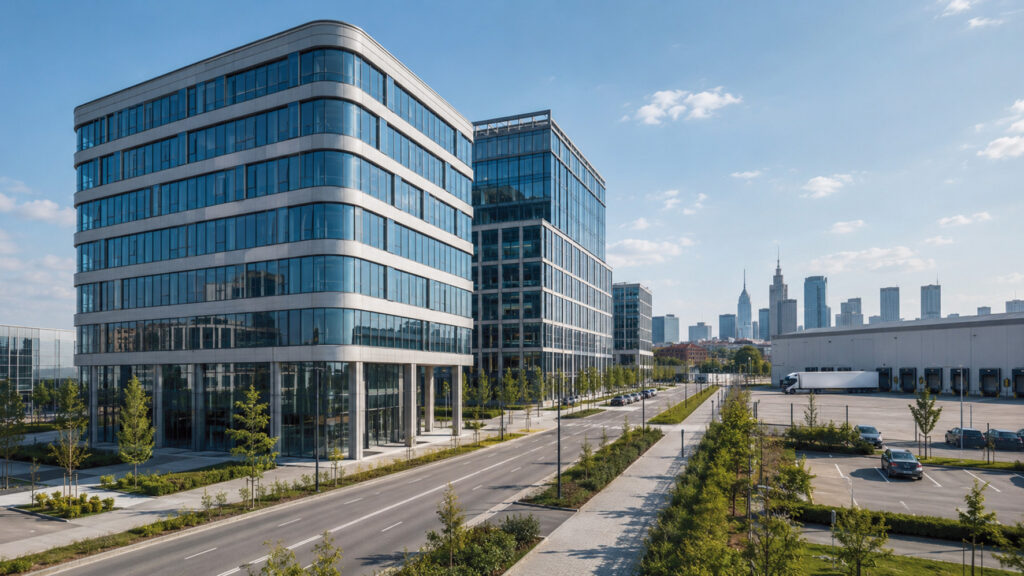
Office properties enjoy the greatest interest among Polish investors, mainly in Warsaw, but also in Kraków and Wrocław. In 2025, domestic capital accounted for around 30 percent of the transaction volume value in the office sector and for half of all acquisitions registered in this segment.
This year, further transactions confirm the growing activity in this area. Syrena Real Estate is consistently expanding its portfolio of prestigious Warsaw office buildings, while Sando Office bought the Class A Brain Park B office building in Kraków from Echo Investment for EUR 40.3 million. Another important signal of the growing strength of Polish capital was the ordering of the ownership structure of Mennica Legacy Tower in Warsaw. The agreement that was concluded created a real possibility of redeeming the bonds issued by the GGH PF3 group, the project’s previous second shareholder.
The growing activity of domestic investors is also visible in the retail and logistics-warehouse sectors. Retail parks, convenience facilities and warehouses attract the greatest interest, especially those offering potential for value growth. In both the retail and warehouse segments, Polish entities already account for a market share of over a dozen percent.
One fifth share in transactions
Domestic capital participates in the implementation of investment projects primarily through special purpose vehicles and joint venture structures. One example is Atlas Ward Polska, which is holding talks with Ghelamco regarding the joint implementation of three large investments, including the Warszawa Gdańska project, which involves the construction in Warsaw of a new railway station and a complex of four commercial buildings with a total area of around
100,000 sqm.
The pace of change is best illustrated by market data. Just four years ago, Polish capital accounted for around 2 percent of the value of the commercial real estate investment market. In 2024, this share rose to around 9 percent, and in 2025 it had already reached around 20 percent of the transaction volume value.
Its own investment model
Polish capital is developing according to its own investment model. It uses the advantage resulting from excellent knowledge of the local market, operational flexibility and a shorter decision-making process. Private investors, entrepreneurs, family offices and family foundations most often invest their own capital in real estate, supplementing it with bank financing that is now more accessible.
Investment decisions are based on knowledge of local conditions. Polish investors efficiently assess administrative, technical and planning risks, finalize transactions faster and willingly take advantage of opportunities that appear outside the public offer market. Off-market transactions are popular, as they allow investors to acquire assets with potential for improving the lease structure, modernization, change of function, optimization of operating costs or preparation of the property for refinancing or sale.
Domestic capital has successfully developed its own operating models. Direct purchases of real estate, special purpose vehicles, family foundations, closed-end funds and joint venture structures make it possible to effectively combine private capital with bank financing and build professional investment platforms.
Building investment portfolios as asset protection
For entrepreneurs, private investors and family foundations, commercial real estate is today becoming one of the most important tools for asset protection, portfolio diversification and building long-term income. Long-term lease agreements allow returns of around 6 to 10 percent annually, while prestigious assets in the largest cities also offer value growth potential and strengthen the position of their owners.
Family foundations play an important role, supporting asset succession and the long-term reinvestment of capital. Along with the generational change in Polish family businesses, commercial real estate is becoming a natural element of investment strategies, providing stable cash flow, predictable revenues and effective diversification of income sources.
The growing importance of domestic capital in transactions in the commercial sector is not a temporary trend. Although its market share in Poland remains lower than in countries such as the Czech Republic or Hungary, the pace of development is impressive. Polish capital is increasingly boldly using its advantage resulting from local competencies and a long-term approach, becoming one of the most important participants in the commercial real estate market
in Poland.