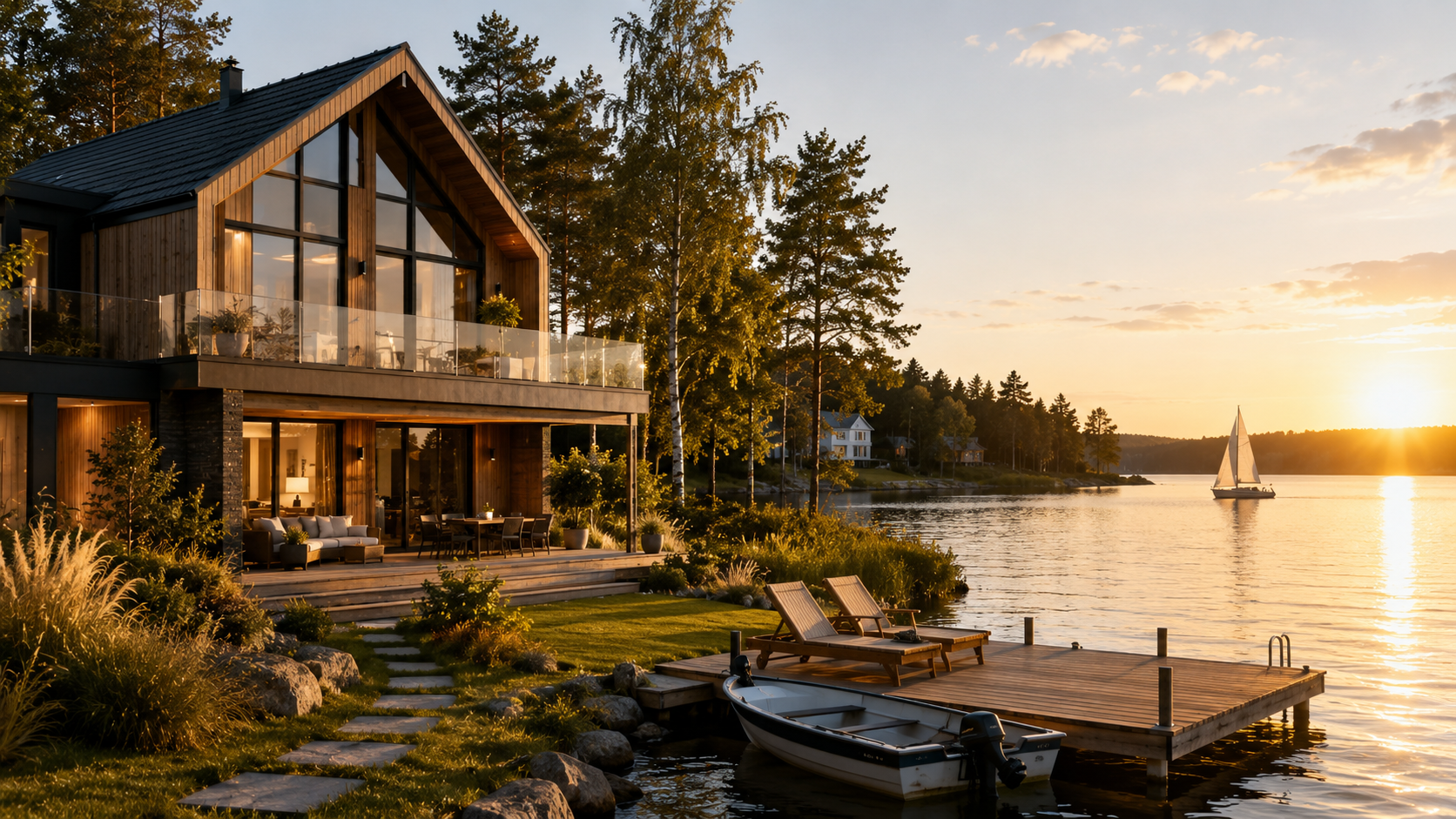
Four Pillars of Poland’s Second Home Market
The Baltic Coast
– Poland’s Largest Holiday Property Market
The Polish coast remains the largest and most developed segment of the country’s second home market. It accounts for a significant share of investment apartments, aparthotels and condo developments, yet it is not a homogeneous market. The Tri-City, Kołobrzeg, Świnoujście, Międzyzdroje, Ustka and the Hel Peninsula differ in terms of customer profiles, the length of the tourist season and their potential for generating income.
The attractiveness of an investment is determined not only by its proximity to the beach, but also by year-round demand, transport accessibility, the reputation of the destination, the quality of infrastructure and the level of competition.
Demand Extending Beyond the Summer Season
In July and August 2025, coastal accommodation establishments welcomed 2.1 million tourists, who accounted for 9 million overnight stays—an increase of 6 per cent and 3.3 per cent respectively compared with the previous year. These figures do not include privately owned apartments rented through online platforms, which means that the actual size of the market is even larger.
A particularly important position is occupied by the West Pomeranian Voivodeship, which accounts for 13.5 per cent of all accommodation establishments and 18 per cent of the country’s accommodation capacity. This confirms the strength of the market, but at the same time reflects growing competition, in which investment quality, management standards and the range of additional services determine competitive advantage.
Demand along the coast is generated not only by holidaymakers, but also by international visitors, business travellers and guests using spa and wellness facilities. As a result, the most developed destinations are becoming increasingly successful in extending the tourist season and reducing their dependence on the two summer months.
The Tri-City – A Year-Round Market
The Tri-City stands out from the rest of the Polish coast because it combines the functions of a seaside resort with those of one of the country’s largest metropolitan areas. Tourist demand is complemented by business, academic, conference and residential segments, significantly reducing seasonality.
Gdańsk, Sopot and Gdynia attract the greatest interest from investors, although each of these locations has a distinct profile. Gdańsk offers the greatest potential for short-term rentals, particularly in the historic city centre and the coastal districts. Sopot remains the most prestigious and, at the same time, the most supply-constrained market, attracting investors focused primarily on capital preservation. Gdynia, with its more residential character, is well suited to models combining personal use with medium- and long-term rentals.
The Tri-City’s strength lies in its well-developed transport infrastructure, which enables the market to operate throughout the year. At the same time, investors should pay close attention to the legal status of individual properties and to regulations governing short-term rentals, as these may affect the way in which the property can be used.
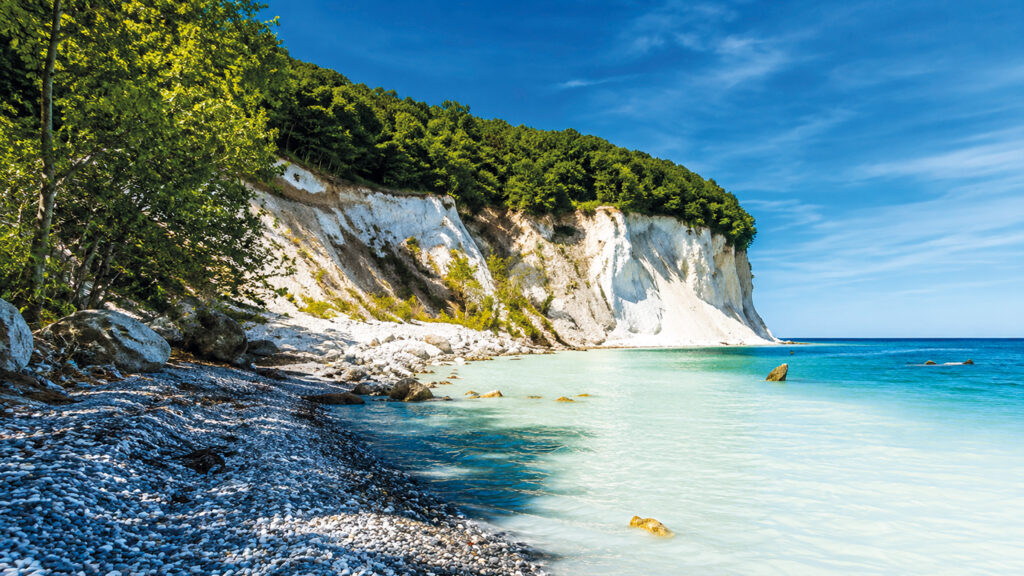
Świnoujście – A Market with International Demand
Świnoujście stands out thanks to its location on the German border and its strong position in the health resort tourism segment. The significant share of international visitors extends the tourist season and supports higher-standard investment projects.
The city has become one of the main centres for the development of apartments managed by professional operators. This model limits the owner’s involvement; however, profitability still depends on the quality of management, the terms of the agreement and the level of competition in the local market.
For investors seeking stable, year-round demand, particularly from international clients, Świnoujście remains one of the most attractive locations on the Polish coast.
Kołobrzeg – A Year-Round Market for Leisure and Health
Kołobrzeg is one of the most mature holiday property markets on the Baltic coast. Its competitive advantage lies in combining the functions of a seaside resort and a health spa, meaning that demand is not limited to the summer season. Health tourism, rehabilitation services and wellness attract visitors throughout autumn and winter as well.
The market includes investment apartments, hotels, condo developments and sanatoriums, while in the premium segment, comprehensive leisure infrastructure and locations close to the beach and promenade are becoming increasingly important. With a large number of properties available, the success of an investment depends above all on having the right location—it is this factor that determines rental demand and the property’s future value.
Międzyzdroje – A Premium Market
Międzyzdroje is a smaller but prestigious market whose strengths lie in its well-established reputation, its location on Wolin Island and the limited availability of attractive development land. Although demand remains more seasonal than in Kołobrzeg, the best locations are capable of achieving high rental rates.
Over the long term, the value of an investment depends not only on its location, but also on the quality of the project and the standard of its maintenance. Międzyzdroje remains an attractive choice for investors who accept greater seasonality in exchange for the potential of the premium segment and the limited supply of the most desirable properties.
Ustka – An Intimate Holiday Market
Ustka is a smaller and more intimate market compared with the largest seaside resorts on the Polish coast. Its strengths include its health resort traditions, family-oriented character and lower building density. Its limitations are weaker transport accessibility and a greater dependence on seasonal tourist traffic.
The greatest potential lies in properties located close to the beach, the harbour and the spa district. Projects in less attractive locations must stand out through their quality and the range of services they offer in order to compete effectively for guests. Ustka can be a good choice for investors wishing to combine personal use with rental income.
Hel Peninsula – Value Driven by Limited Supply
The Hel Peninsula is one of the most unique holiday property markets in Poland. Jurata, Jastarnia, Hel, Kuźnica and Chałupy differ in character, yet they all benefit from the limited availability of land, a strong tourism brand and an attractive location between the Baltic Sea and the Bay of Puck.
The greatest strength of this market is its limited supply, which supports the preservation of property values, particularly in the premium segment. At the same time, investors must take into account pronounced seasonality, transport constraints, as well as environmental and planning regulations, all of which may affect both development opportunities and property maintenance costs.
The Premium Market – From an Apartment to a Complete Experience
The premium segment on the Baltic coast is evolving. The value of a property is no longer determined solely by its location, the standard of its finishes and its sea view, but by the entire ecosystem of services: reception, concierge, SPA, restaurant, leisure facilities and professional rental management.
In the premium investment segment, competition is no longer limited to other apartments, but also includes high-end hotels. As a result, architecture, the quality of shared spaces and the long-term competitive advantage of the project are becoming increasingly important. Extensive infrastructure enhances the attractiveness of the property, but it also generates ongoing costs. Before making a purchase, investors should carefully analyse how these costs are allocated between the owners, the operator and the owners’ association.
Condo Developments and Apartments Managed by an Operator
The Polish coast is the country’s largest market for apartments managed by professional operators. This model allows the owner to benefit from the property without having to manage rentals, reservations or guest services personally. However, the terms of such investments vary considerably. What matters most is not the declared rate of return, but the actual financial result after taking into account all costs: the operator’s commission, operating charges, taxes, insurance, renovations and periods during which the property is unavailable for rental.
The credibility of the operator and the quality of management of the entire complex are equally important. In developments with a large number of similar units, investors acquire not only an apartment, but also a share in the economics of the entire property and in its reputation.
Marinas, Hotels and Gastronomy Extend the Tourist Season
The attractiveness of the second home market is determined not only by the property itself, but also by the surrounding tourism infrastructure. Marinas, high-end hotels, gastronomy and leisure facilities increase the attractiveness of a location and help reduce seasonality.
Individual regions rely on different competitive advantages: the Tri-City through business, culture and gastronomy; Kołobrzeg and Świnoujście through their health resort and wellness functions; and the Hel Peninsula through water sports and its coastal lifestyle.
Extending the tourist season does not mean that demand becomes evenly distributed throughout the year, but it does change the way the coast is used. Weekend breaks, wellness tourism, conferences, remote working and active tourism are all playing an increasingly important role.
National data confirm the growing importance of travel outside the peak season. In the first quarter of 2025, 8 million tourists used registered accommodation establishments, an increase of 12.9 per cent compared with the previous year. Although these figures do not relate exclusively to the coast, they point to a broader trend away from a model based solely on summer holidays.
For investors, the key question is therefore not only how many visitors arrive in July and August, but also whether a location offers compelling reasons to visit outside the peak tourist season.
Key Risks
The greatest challenge on the Baltic coast is growing competition. A large number of similar apartments may limit rental price growth, while strong income during the peak season does not always compensate for weaker months.
Maintenance costs are also an important factor. Humidity, salt and intensive use result in higher expenditure on maintenance and repairs, which should be taken into account when assessing an investment.
Investors should also consider the risk of regulatory changes affecting short-term rentals, as well as the entry price. In the best locations, the premium paid for sea views, prestige and proximity to the beach may limit future growth potential if the property is purchased at too high a price.
Who Is It For?
The Baltic market is suitable for investors who wish to combine the potential for capital appreciation with rental income and the possibility of personal use. However, it is not a single product, but rather a collection of several distinct investment strategies.
The Tri-City is the right location for investors seeking the greatest diversification of demand, year-round activity and the alternative of medium- or long-term rentals.
Sopot and Jurata are destinations for buyers focused on prestige, limited supply and capital preservation, who accept a high entry threshold and lower current profitability.
Świnoujście is a city for investors interested in international clients, the operator-managed model and a well-developed hotel and health resort infrastructure.
Kołobrzeg is the choice for those seeking a combination of holiday tourism, health-related stays and a relatively long tourist season.
Międzyzdroje may appeal to investors willing to accept greater seasonality in exchange for the strong reputation of the resort and the potential of the premium segment.
Ustka is an option for buyers looking for a more intimate market, personal use and a lower density of development.
The Hel Peninsula is the location for clients for whom the uniqueness of the destination, limited supply, water sports and lifestyle value are more important than generating consistent income throughout all twelve months of the year.
Poland Weekly Analysis
The Baltic coast is Poland’s largest holiday property market not only because of the scale of summer tourist traffic. Its greatest strength is its diversity from the year-round urban market of the Tri-City, through the international appeal of Świnoujście and the health resort character of Kołobrzeg, to the prestigious, supply-constrained locations of the Hel Peninsula.
The market is maturing, and with it the criteria for investment selection are changing. Simply having an address „close to the sea” is no longer an investment strategy. The most resilient projects are those that combine an exceptional location with good management, appropriate infrastructure and the ability to attract visitors beyond the summer peak season.
For investors, a coastal location can serve both as a source of income and as a means of long-term capital allocation. However, success is not determined by the view from the terrace alone. It is determined by the entire economics of the asset: the entry price, maintenance costs, the length of the tourist season, the structure of demand, the quality of the operator and the future competitive landscape.
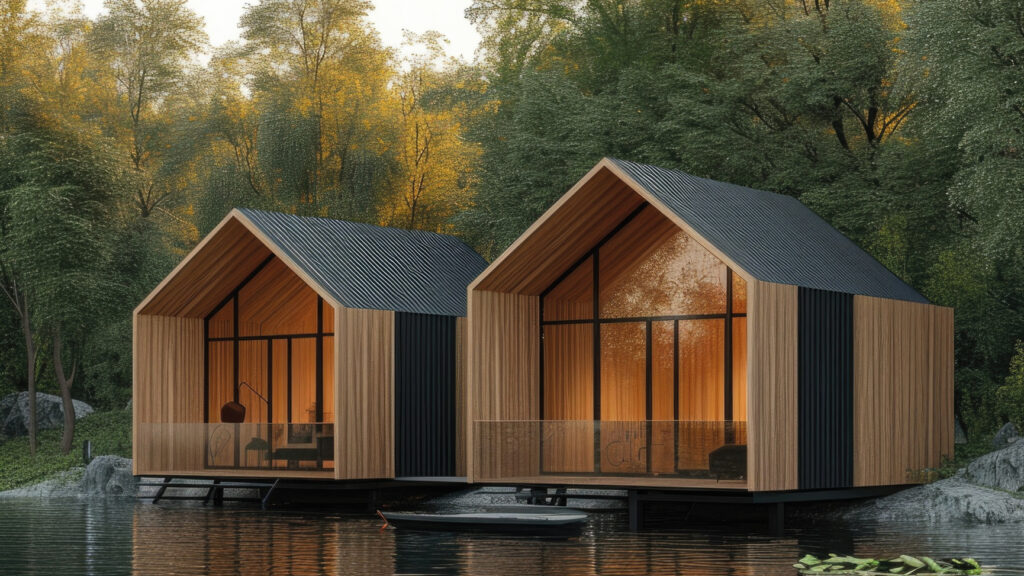
Mazury
A Premium Market Whose Value Is Built by Nature
Mazury is one of the most distinctive, but also one of the least homogeneous, holiday property markets in Poland. Unlike the coast, where apartments and operator-managed projects dominate, the primary asset here remains the house: a lakeside residence, a lake house, a country estate or a villa by a marina.
The value of such properties is determined primarily by limited supply. The most important factors are access to the water, privacy, the size of the plot, the view, the possibility of mooring a boat, and the quality of the surrounding environment. In the premium segment, the address alone is not enough-it is the specific lake, location, infrastructure and the long-term competitive advantage of a particular destination that matter.
Mazury therefore represents a different type of investment from a seaside apartment. It requires a greater capital commitment, a longer investment horizon and a more individual approach to analysis.
Not a House, but a Piece of the Landscape
In Mazury, investors purchase not only a building, but also the relationship between the property and its surroundings. Two similar houses may have completely different values if one has direct access to a lake, good transport access and year-round infrastructure, while the other is located in a less attractive setting.
The most sought-after properties are those with direct waterfront access, large glazed façades, terraces, private piers and solutions enabling year-round use. In this segment, construction quality, energy efficiency, internet connectivity and access to essential services are also important considerations.
There Is No Single Mazury
The area of the Great Masurian Lakes enjoys the strongest recognition, including Mikołajki, Giżycko, Ryn and Węgorzewo. Mikołajki has the strongest tourism brand and the most developed premium segment, Giżycko serves as the region’s sailing centre, while Ryn and Węgorzewo offer a more intimate atmosphere while maintaining access to the main waterways.
Southern Mazury, including the area around Ruciane-Nida, attracts above all those seeking nature, forests and a quieter style of recreation. Beyond the main centres, more secluded properties located on smaller lakes are also available, offering greater privacy, although they are usually characterised by lower liquidity and more limited rental potential.
For many buyers, the opportunity to own a house set within an idyllic landscape remains the greatest value that Masuria has to offer.
Demand from Warsaw as the Foundation of the Market
Mazury is the natural second home market for Warsaw. The capital provides a large pool of affluent buyers for whom a lakeside property serves as a place for weekend relaxation, remote working and family stays, while also representing a potential investment.
The proximity of a large market increases the property’s value in use. A house that can be reached within a few hours remains more attractive than a location requiring a complicated journey. Warsaw also generates demand for short-term rentals, corporate retreats and group stays.
For foreign investors, the capital serves as the gateway to Mazury. The region can be an alternative to the more expensive lake property markets of Western Europe; however, international buyers generally expect professional service, a transparent legal status, a high standard of quality and year-round property management.
Lake Houses – The New Standard of Mazury Premium
The most promising segment is modern lake houses-year-round homes designed with comfort, energy efficiency and direct contact with the surrounding landscape in mind. Large glazed façades, natural materials, terraces, wellness areas and dedicated workspaces are transforming the traditional summer cottage into a year-round property.
For investors, such a house is more unique than an apartment, but it also requires greater involvement. The costs of maintaining the plot, private pier, installations and infrastructure are higher, while entrusting the entire operation to a professional operator is more difficult.
The best properties can nevertheless achieve high rental rates because they offer an experience that hotels cannot provide: privacy, waterfront views and private space for families or groups of friends.
Marinas and Harbours as Value-Creating Infrastructure
In Mazury, access to a marina can be as important as proximity to the beach is on the coast. For boat owners, the availability of mooring facilities, servicing, winter storage and access to boating infrastructure are key considerations. A well-developed marina increases the attractiveness of a location, supports restaurants and local services, and can generate additional rental demand. However, being immediately adjacent to a marina is not always the best option, as many premium clients seek peace and privacy, even at the cost of being located further away from the main infrastructure.
Workation – A New Way of Using a Second Home
Remote working has increased the value of holiday properties, which today can serve as a seasonal place to live and work. In Mazury, however, the potential of this trend depends not on the lake view itself, but on practical conditions: reliable internet access, year-round heating, dedicated workspace and access to essential services.
Workation is particularly well suited to houses located within easy reach of Warsaw and to properties offering greater privacy and multiple workspaces. It can help extend the season into spring and autumn, but it does not eliminate seasonality. Longer stays often mean lower daily rates, so higher occupancy does not always translate into maximum revenue.
Wellness as the Key to Year-Round Demand
Mazury has natural conditions for the development of wellness tourism. Saunas, SPA facilities, outdoor activities, local gastronomy and wellness-oriented experiences help reduce dependence on the short summer season.
In the premium segment, wellness is no longer an additional feature but has become part of the business model. A well-designed property can attract guests during autumn and winter as well, justifying higher prices and increasing rental potential.
A Lifestyle Investment, Not a Mass-Market Financial Product
Mazury remains a market where value in use is just as important as investment potential. Many buyers accept lower current profitability in exchange for privacy, an exceptional location and the opportunity to enjoy their own property by the water.
There are income-generating models-from renting large premium houses to marina developments and boutique resorts—but Mazury is not a natural market for large-scale condo investments. Its competitive advantage lies in its limited scale and its close connection with nature.
For this reason, careful selection remains essential. The greatest value lies in properties possessing features that are difficult to replicate: private waterfront, exceptional views, large plots, access to navigable waterways or high-quality surrounding infrastructure.
Legal and Environmental Constraints
Purchasing a lakeside property requires a broader analysis than a standard residential transaction. Key considerations include land status, development rights, road access, planning restrictions, protected zones, access to the shoreline and the legal status of existing infrastructure, such as private piers.
The description „access to the lake” does not always mean unrestricted use of the shoreline. Properties located in protected areas and land with specific legal status also require particular attention. For foreign investors, an additional consideration is verifying the legal requirements governing property acquisition. Legal restrictions may make new developments more difficult, but at the same time they strengthen the value of existing assets that are well located and legally compliant. The limited ability to develop new waterfront projects may increase the premium attached to the best locations.
Key Risks
The greatest challenge remains seasonality. Workation and wellness extend the period during which properties are used; however, the main demand still falls between late spring and early autumn. Limited liquidity is another risk. A unique property may preserve its value, but selling it usually takes longer than selling an apartment in a major city.
Maintenance costs are also significant, ranging from heating and routine maintenance to the upkeep of the grounds, private piers and technical installations. In the case of rental properties, additional expenses related to guest services and property management must also be taken into account.
The value of a property cannot be based solely on a single advantage, such as a lake view. Accessibility, the surrounding environment, infrastructure and the long-term condition of the natural environment are equally important.
Who Is It For?
Mazury is a market for investors seeking a property that combines value in use, limited supply and long-term growth potential. It is best suited to buyers from Warsaw, boat owners, foreign investors and purchasers interested in premium products: private residences, lake houses, wellness projects and boutique resorts.
However, it is not a market for those expecting a completely passive investment, a quick resale or stable income throughout the year. Masuria requires careful selection, active involvement and a long-term approach.
Poland Weekly Analysis
Mazury does not compete with the Baltic coast in terms of the number of apartments or the scale of tourist traffic. Its strength lies in something far more difficult to replicate: space, privacy, proximity to the water and the opportunity to own a place within an exceptional natural landscape. The most valuable lakeside properties do not appreciate because more of them are being built, but because there are fewer and fewer locations of this kind. A house with legal access to the water, a large plot and year-round functionality remains an asset that is difficult to replicate. For investors, Mazury is a long-term market. What matters is not only rental income, but also the opportunity to use the property personally, preserve capital and benefit from the value created by limited supply. Here, luxury does not mean a greater number of services-it means space, tranquillity and closeness to nature.
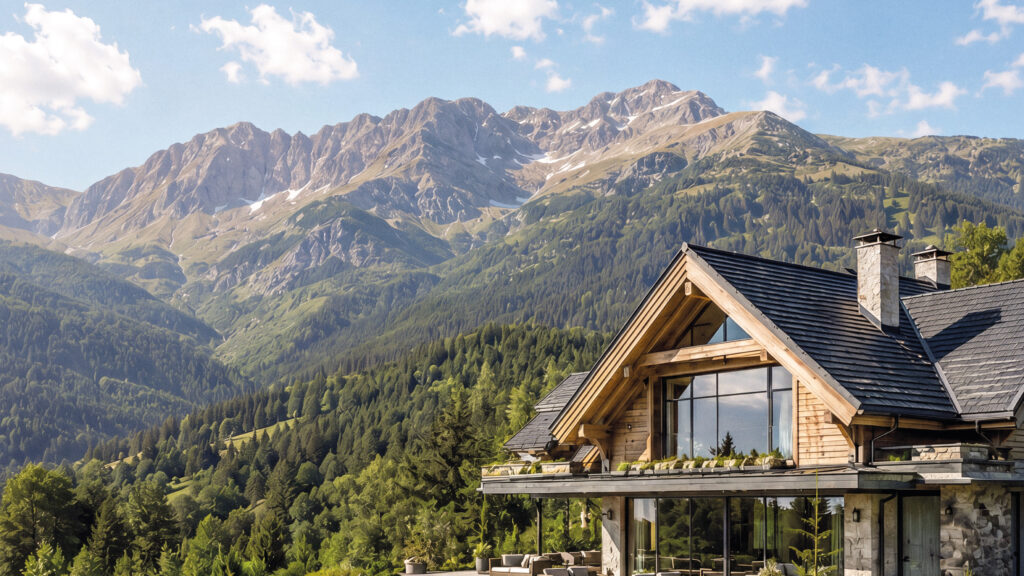
Mountains
A Year-Round Premium Property Market
The Polish mountains are among the most stable segments of the holiday property market. Unlike the coast and Masuria, which are more heavily dependent on specific seasons, the mountain regions benefit from several sources of demand: skiing in winter, active tourism in summer, autumn stays close to nature, and a year-round offering of SPA, wellness and business events.
This diversity makes the mountain market one of the more resilient segments of the second home sector. It does not eliminate seasonality, but it allows property usage and income to be distributed more evenly throughout the year.
The Mountains as a Year-Round Market
The model based solely on the ski season is gradually becoming a thing of the past. Today, the best locations are developing year-round offerings that include wellness centres, cycling trails, sporting events, gastronomy, family attractions and spaces designed for remote working. For investors, this means a change in the way properties are evaluated. Their value is no longer determined solely by proximity to the ski slopes, but above all by the region’s ability to attract visitors throughout the year.
Zakopane and Kościelisko – The Highest Recognition, the Highest Prices
Zakopane remains the best-known mountain market in Poland and one of the strongest tourism brands in the region. However, strong demand is combined with a limited supply of attractive development land, resulting in high prices for the best locations.
Kościelisko is gaining increasing importance as a quieter alternative to the centre of Zakopane, offering views of the Tatra Mountains, greater privacy and lower-density development. The premium segment here consists primarily of apartments and residences whose value is based on location and the uniqueness of their surroundings.
Białka Tatrzańska and Bukowina Tatrzańska – Family Resort Destinations
Białka Tatrzańska and Bukowina Tatrzańska have evolved from local villages into two of the fastest-growing ski destinations in Poland. The expansion of ski slopes, thermal baths, water parks and hotel infrastructure has created a market based on year-round resorts offering wellness services and professionally managed rental programmes.
This is a segment that is particularly attractive to investors targeting family demand guests who often return to the same trusted properties season after season.
Szczyrk and Wisła – The Beskids Are Changing Their Image
The Beskids, once associated mainly with weekend breaks for residents of Silesia, have gained nationwide recognition thanks to the modernisation of ski slopes, the development of hotels and the expansion of cycling infrastructure.
Szczyrk has become one of the most modern ski resorts in Poland while simultaneously developing its summer, conference and wellness offerings. Wisła benefits from its strong brand and well-developed hotel infrastructure, combining sport, recreation and business events.
Karpacz and Szklarska Poręba – The Sudetes Are Back in the Game
Lower Silesia is currently one of the fastest-growing mountain property markets. Karpacz attracts year-round visitor traffic thanks to its strong brand, infrastructure and family appeal, while Szklarska Poręba is developing the active tourism segment through cycling, cross-country skiing and hiking. The growing popularity of both destinations is increasing demand for premium apartments and boutique hotel developments.
Krynica-Zdrój – Health as a Competitive Advantage
Krynica combines the functions of a health resort, a ski destination and a conference centre. As a result, it attracts visitors not only during the winter season, but also for health, rehabilitation and business stays. This diversity makes the market more resilient to seasonal fluctuations than destinations focused solely on tourism.
Wellness, SPA and Premium Hotels
Mountain developments are increasingly based on comprehensive wellness offerings, including SPA facilities, saunas, swimming pools, premium gastronomy and spaces designed for remote working. This helps extend the tourist season through wellness stays, short breaks and workation.
Conferences and Business
The MICE segment is becoming an important source of demand in Zakopane, Wisła, Szczyrk, Krynica and Karpacz. Conferences, training events and corporate meetings help increase occupancy outside the holiday and ski seasons, improving the stability of revenue.
Lifestyle as the New Definition of Luxury
The mountain market is becoming less and less dependent on skiing alone. Today’s investor is buying a lifestyle: morning coffee with a view of the Tatra Mountains, an evening in the sauna, a full-day cycling excursion, dinner at a regional restaurant, or a remote-working weekend overlooking the mountains.
It is precisely these experiences that are now becoming the main component of value in premium real estate.
Key Risks
The greatest challenge remains the limited supply of attractive development land and the growing restrictions on construction in mountain areas. Another risk is the dependence of some locations on weather conditions and the length of the ski season, which is why properties offering year-round amenities are gaining an increasing competitive advantage. An additional factor is the rising cost of construction, maintenance and the professional management of premium properties.
Who Is It For?
The Polish mountains are well suited to investors seeking properties with high value in use and the potential for year-round occupancy. It is a market for those wishing to combine personal use with rental income, as well as for investors who value greater stability than that offered by purely seasonal resorts.
Zakopane, Kościelisko, Karpacz and Krynica attract the premium segment, focused on prestige and capital preservation. Szczyrk, Wisła, Białka Tatrzańska and Bukowina, in turn, offer potential linked to the growth of active family tourism.
Poland Weekly Analysis
Warmia, the Bieszczady Mountains, Roztocze and Kashubia do not compete with the Baltic coast or the Tatra Mountains in terms of visitor numbers. Their competitive advantage comes from authenticity, limited supply and the opportunity to create premium properties built around space and nature. As household wealth increases and buyer preferences evolve, these regions may become the next stage in the development of Poland’s second home market.
Emerging Destinations Markets That Are Only Beginning to Build Their Value
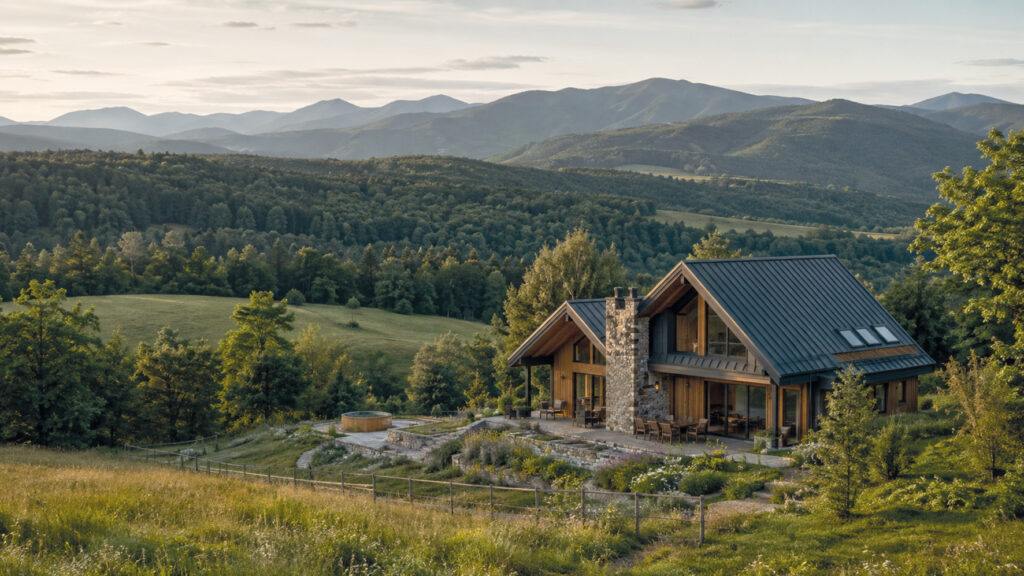
Although most investors continue to focus on the Baltic coast, the Tatra Mountains and Masuria, regions such as Warmia, the Bieszczady Mountains, Roztocze and Kashubia are attracting increasing interest. Their strength lies not in their scale, but in their intimate character, limited supply and the opportunity
to create unique premium developments that are closer to nature than those found in mass tourism destinations.
Warmia – The Luxury of Silence
Warmia attracts buyers looking for large plots, lakes, forests and privacy. Its proximity to Warsaw and the Tri-City supports demand, while new developments increasingly combine high quality, sustainability and year-round leisure.
The Bieszczady Mountains – The Value of Nature
The Bieszczady Mountains remain one of the most unspoilt regions of Poland. Luxury homes, boutique guesthouses and intimate resorts are being developed here for clients who value space and close contact with nature. The limited supply of attractive development land may support the value of the best locations.
Roztocze – The Development of Slow Tourism
Roztocze is only beginning to build its brand, but it is gaining recognition through active tourism, cycling and culinary experiences. Eco-friendly developments, premium agritourism and small wellness properties are emerging in the region. It is a market with strong potential, although it is still at an early stage of development.
Kashubia – A Quieter Alternative to the Coast
Kashubia benefits from its proximity to the Tri-City, its lakes and the growing demand for year-round leisure. The segment of modern homes, lake houses and boutique premium residential developments is expanding, particularly appealing to residents of major urban areas.
A Common Trend – Less Means More
These emerging destinations attract investors thanks to larger plots, lower-density development, limited supply and projects built around privacy, nature and high-quality architecture.
The growing importance of remote working, wellness and living closer to nature means that these regions are no longer merely niche alternatives. For investors, they may represent an opportunity to enter younger markets with greater growth potential than mature resort destinations.
Poland Weekly Analysis
Warmia, the Bieszczady Mountains, Roztocze and Kashubia do not compete with the Baltic coast or the Tatra Mountains in terms of visitor numbers. Their competitive advantage comes from authenticity, limited supply and the opportunity to create premium properties built around space and nature. As household wealth increases and buyer preferences evolve, these regions may become the next stage in the development of Poland’s second home market.