Civil Society
When discussing Poland’s military security and our personal security, we most often compare ourselves with other European Union countries. We consider what it looks like here and what it should look like, and if something does function here already, we usually conclude that against other states we still come off worse.
Here are a few examples of solutions concerning security and functioning protective systems in other countries. For example, in Switzerland compulsory military service is mandatory; in Denmark as of July 1 of this year mandatory military service was introduced for some women, although the number of volunteers exceeds the armed forces’ needs. In Finland there are around 50.5 thousand shelters, capable of sheltering 4.8 million people, which is almost 90 percent of the population, and moreover 83 percent provide protection against nuclear or chemical threats. In Sweden, everyone aged 16 to 70 is part of Sweden’s total defense and is obliged to serve in the event of war or the threat of war. The same total defense obligation also applies to foreigners living in Sweden. If the Swedish government decides to introduce a state of heightened readiness, every person’s duty is to perform such service, and children during that time do not remain with their parents but will receive care in the municipality.
When following solutions related to obligations and pro-defense training in other countries, the topic of financial remuneration for citizens or extra motivating pay for time devoted during training and service appears rarely. Of course such things do appear, but they are not something meant to motivate people to take on additional duties; they are rather only compensation.
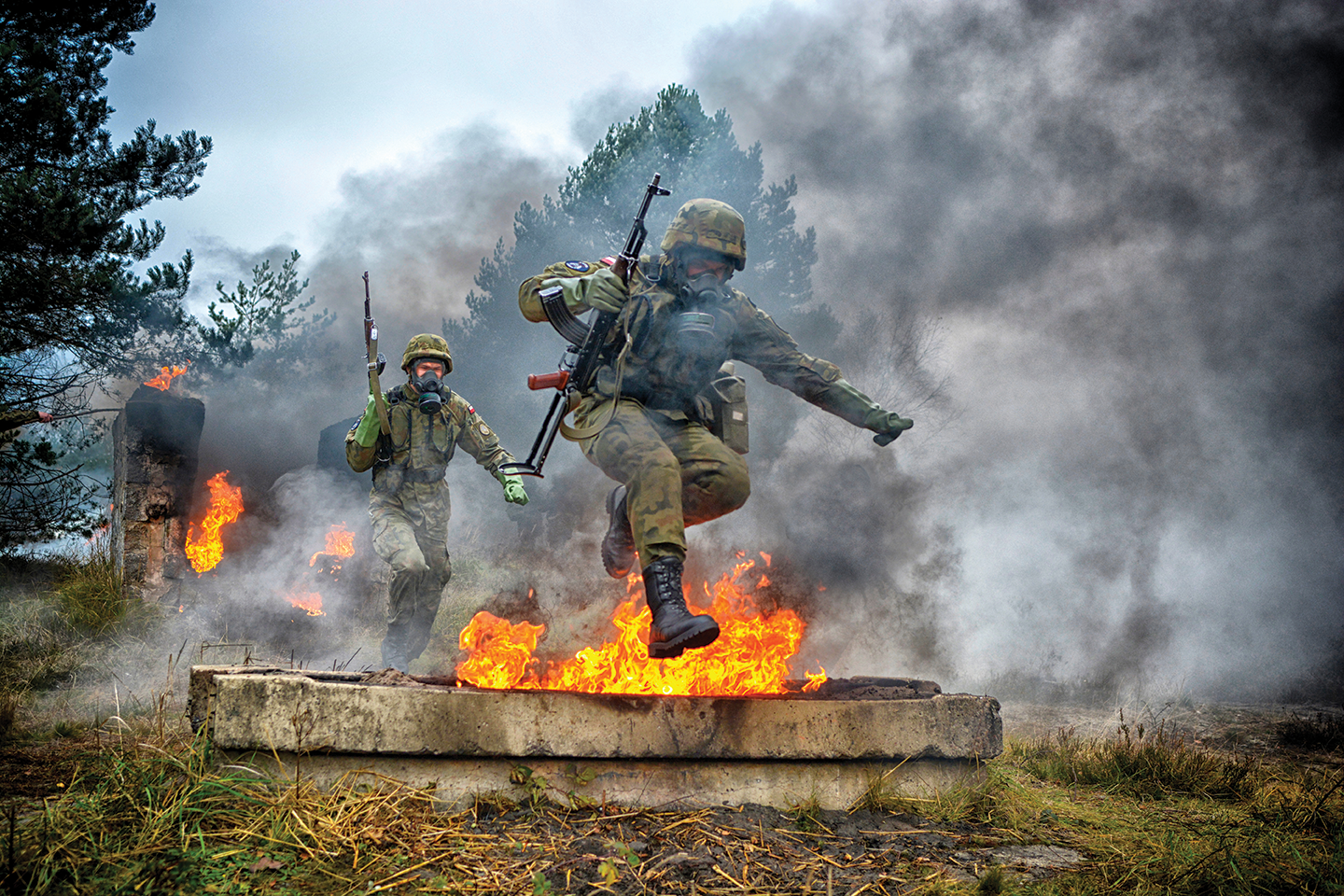
The war in Ukraine has automatically forced not only the Polish Armed Forces and services—our weapon—
to be put on alert, but also a look toward reserves and civilians. Bombs falling on Ukrainian towns and villages often “accidentally” choose their victims; there is no division by age, faith, sexual orientation, or political sympathies—war spreads destruction equally. Russia is doing everything to intimidate all of Ukraine; it is no longer fighting only the Ukrainian soldier, it is fighting the whole society.
The question presses itself: where are we, Poles, today?
The Act of December 5, 2024 on the protection of the population and civil defense—no matter how well it might be written—if we ourselves, as a whole, do not change our approach to the duty of defending our country, no regulation, no safety guide will make us ready for hard times.
I would like to explain right away what, in my opinion, it means to “feel safer.” A sense of security exists when we are aware that we have control over something. An example comes to mind: riding a bicycle, we decide whether and when we turn, whether and when we brake; we choose the route we want to follow. Remember what it feels like to sit on a bike’s rear rack as a passenger, although I know this is now a forgotten image from our roads. By giving someone else the ability to steer, we become dependent on that person, and one can say it’s fine until a crash happens.
Our Polish conversations about pro-defense training, civil defense, or military service often drift away from the essence of what they are. And they are service! We focus on questions like: how much can you earn from it and what incentive programs are proposed to attract society to participate in a given project.
I must admit that I watched with embarrassment the buses plastered with ads encouraging service in the military: “Become a soldier—Voluntary Basic Military Service 4,650 PLN from the first day of service.” The question immediately arises: do we want soldiers who join the military out of a sense of duty and passion, or a mercenary army where the main motivator is the zloty? If it’s the latter, then let’s create mercenary forces and pay someone handsomely for our security. Yes, of course, money is important and every service should be fairly remunerated, but it should not be the main factor motivating someone to join the ranks of the military.
That is why I raise this topic, because
I listen with surprise to experts and journalists who at every step raise the issue not only of compensation for time devoted during training, but also ask what the citizen will get out of it by training and joining, for example, civil defense.
How are we to build our civic awareness and a sense of duty toward our Homeland and fellow citizens if most of our discussions on this topic are based on financial matters or other additional “incentives”?
Universal training can cause us to have the ability to influence the direction of our ride; we will become capable of acting. Being a citizen is not only going to the ballot box and paying taxes, but also a duty toward the place where we live. We will be much more comfortable on our couch and perhaps start to appreciate it more when from time to time we get our butt off it in its defense, so that no one takes it away from us.
This year the French government adopted a law concerning the National Youth Service, dividing it into three stages: the first stage is two weeks of training in barracks conditions, the second consists of socially useful activity for the country—at least 84 hours of activity—while the third stage, optional, consists of active or reserve service in the armed forces. The French system of building civil society has been implemented since 2019. Today the French themselves already assess that it has a positive effect not only on building reserves but also on relations among citizens.
The Italians, meanwhile, treat public service very seriously; since 1985, civil service has been, on a par with military service, a full-fledged form of defending the homeland. Ultimately, they want to popularize it among young people aged 18 to 28, and the planned number of participants would reach 170 thousand. One also hears voices that this form of building a civic ethos may become mandatory.
Wherever I touch on the topic, I conclude that European countries see the need to engage society in the life of the state—and not only on a voluntary basis. We must answer the question ourselves: where are we? I believe we should push into the past the thinking that “I’m happy to learn something, but give me something for it, preferably an extra day’s pay, a day off work, because I don’t have time on Saturday, Sunday is for family, and I’d like to bring some cool gift home from that training. War, fire, flood—somehow it will be, and not at my place, and besides we’re good at mass mobilizations.” In reality, everything we do, we do for ourselves, so it’s worth getting off the couch and taking advantage of free training, taking
a look at the Safety Guide, and “getting it together.”
Living in good times, let us prepare for the fact that when they change, everyone will know where to go without leaving the steering in random hands, and most importantly we will not let anyone take our bicycle away.