Can a Polish Fintech Build a Global Financial Brand?
XTB is no longer simply a Polish broker that succeeded abroad. The company wants to become a global money-management app and is increasingly taking on the world’s largest investment platforms for customers. More than 2 million clients, record revenue, expansion into new markets and the biggest soccer sponsorship in the company’s history demonstrate the scale of its ambitions. But building a global brand is expensive. The question, then, is not only how far XTB can go, but also how much the journey from Warsaw to the top tier of global finance will cost.
Just a few years ago, XTB was associated primarily with active trading. Today, it describes itself as a global fintech, and its strategy suggests that the company’s ambitions extend much further. Stocks, ETFs, Investment Plans, retirement products, interest on uninvested funds and eWallet are intended to make customers use the app not only when they want to buy stocks or speculate in the markets, but increasingly when they simply want to manage their money.
It may seem like a small distinction. In reality, it represents a fundamental shift in the business model.
XTB is trying to make the transition from broker to financial platform of first choice. If the plan succeeds, the Polish company will find itself competing in a market far larger than traditional brokerage services. At the same time, however, it will face direct competition not only from eToro and Trading 212, which XTB itself identifies among its competitors, but more broadly from an entire new generation of financial apps competing for customer relationships.
Two Million Clients Are Just the Beginning
The numbers illustrate the pace of the transformation. At the end of 2025, XTB had nearly 2165 million clients, up from 1362 million a year earlier. In a single year, the group added more than 864,000 new clients. The number of active clients rose even more significantly, from approximately 701,000 to nearly 1.19 million.
The first quarter of 2026 brought further acceleration. The number of clients surpassed 2.5 million, while the group added approximately 370,000 new clients in just three months. XTB now reports more than 2.9 million investors.
That is a scale that changes the way the company should be viewed.
XTB is one of the few examples of a Polish financial brand capable of attempting to build recognition not merely on a regional level, but across multiple markets simultaneously. It operates in Europe, Asia and South America, and in 2025 entered markets including Indonesia and Chile while expanding its activity in Hungary.
It is also an interesting case from the perspective of the Polish economy as a whole. Poland has built globally recognizable companies in gaming, e-commerce, logistics and manufacturing. Exporting financial brands has proved considerably more difficult. In finance, trust, regulation and local market characteristics create barriers that cannot be overcome by a good product alone. XTB is now attempting to break through precisely that barrier.
Poles Are Discovering the Stock Market
International expansion is one pillar of growth. The other is the changing behavior of Polish investors themselves.
At the end of 2025, banks and brokerage houses participating in KDPW maintained 2535 million securities accounts in Poland. A year earlier, the figure was just under 1.97 million. In a single year, more than 564,000 accounts were added.
XTB has been one of the biggest beneficiaries of this trend. The number of accounts maintained by the company and reported to KDPW increased from approximately 380,000 at the end of 2024 to nearly 822,000 a year later. That represented 32.4 proc. of all accounts reported by KDPW participants. In May 2026, XTB announced that it had surpassed one million brokerage accounts in Poland.
This is not simply the success of one company. It points to a broader shift in financial culture.
Investing has moved from bank branches and traditional brokerage offices to the smartphone. Opening an account, buying an ETF or purchasing a foreign stock is no longer reserved for the most sophisticated market participants. For XTB, this represents an enormous opportunity. But it also marks the beginning of a much more difficult phase.
Building a Global Brand is Expensive
The most interesting numbers in XTB’s 2025 financial statements are not limited to customer growth. Operating revenue reached a record PLN 2146 billion, compared with PLN 1873 billion a year earlier. At the same time, net profit declined from PLN 856.9 million to approximately PLN 644.2 million. The reason is visible on the cost side. Operating expenses increased from PLN 886.7 million to PLN 1314 billion.
Marketing spending rose particularly quickly. In 2024, it amounted to PLN 344.8 million. A year later, it reached PLN 584.9 million — an increase of nearly 70 proc. in a single year.
At first glance, that may look aggressive. From the perspective of building a global platform, however, it is logical. In digital finance, scale is one of the most valuable assets, while acquiring customers is one of the biggest costs.
Importantly, XTB’s average customer acquisition cost in 2025 remained at approximately PLN 700. The company says the stability of this metric confirms the effectiveness of its marketing strategy. XTB is therefore buying growth, but so far it is not paying progressively more for each additional customer. That is an important distinction.
From Ibrahimović to Olympique Lyon
The scale of XTB’s marketing ambitions is becoming increasingly visible outside the financial world as well. The company has used sports for years to build brand recognition. José Mourinho, Iker Casillas, Joanna Jędrzejczyk and Conor McGregor have all worked with the brand, while Zlatan Ibrahimović is its current global ambassador.
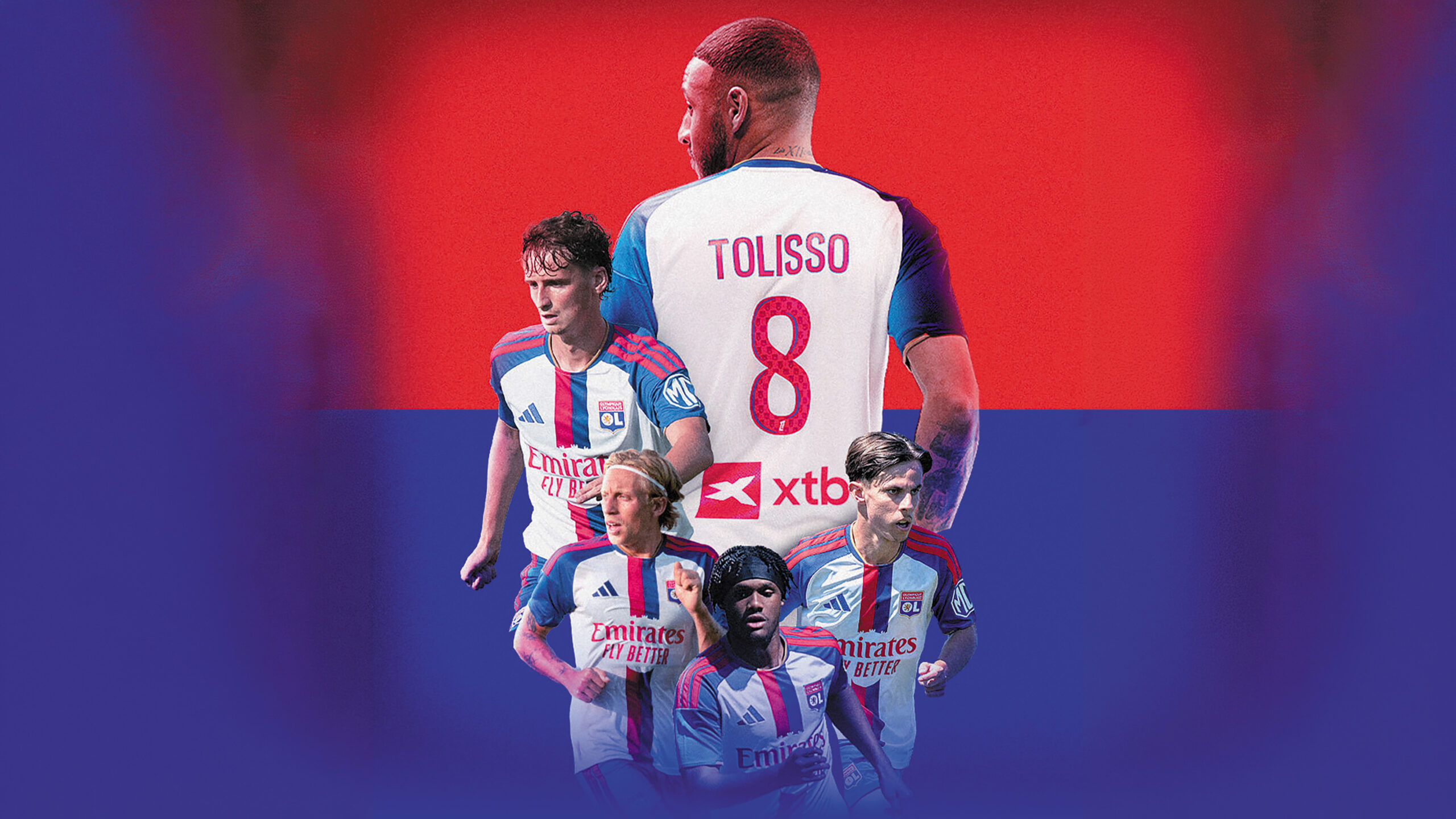
In August 2026, XTB took another step. It became Olympique Lyon’s main partner for three seasons. The Polish company’s logo will appear on the French club’s jerseys, while the partnership will also include its digital channels and a presence at Groupama Stadium. XTB describes the agreement as the biggest soccer partnership in its history and one of the largest in the history of Polish sports marketing.
This is not an isolated investment. The company has also entered into partnerships with FC Porto, SSC Napoli and FIBA. France is one of XTB’s key markets, and the company has declared its ambition to become the market leader and the country’s most popular investment app.
This is no longer the strategy of an exporter of financial services. It is the strategy of a global consumer brand.
The risk is obvious. Sponsorship can buy recognition, but it cannot guarantee customer loyalty. In finance, a brand must be backed by trust, product quality, technology, pricing and security.
XTB itself, however, has provided an argument in support of its strategy. According to the company, a campaign conducted at the turn of 2024 and 2025, which later won an Effie award, contributed to an approximately 27 proc. increase in the number of new accounts. At the same time, unaided brand awareness rose to 41 proc.
The biggest challenge, however, is still ahead.
The boundaries between brokers, fintechs and banks are beginning to blur. Investment platforms are adding savings and payment products. Fintechs are moving into investing. Banks are developing apps and brokerage services.
The most striking example is Revolut, which began primarily as a currency-exchange app and has grown into an institution with more than 80 million customers, increasingly moving toward a full banking model that includes lending and wealth management.
XTB is approaching the same destination from the opposite direction. It started with investing and is now adding more functions related to everyday financial management.
If both trends continue, brokers, fintechs and banks may eventually meet in the same place – a single app managing most of a customer’s financial life. At that point, the advantage of traditional financial institutions will no longer derive simply from the breadth of their offerings.
Technology Is the Product
Technology will be critical in this competition. XTB has spent years developing its own platform rather than relying on an outside provider for its primary customer interface. The company emphasizes that developing proprietary technology is one of the foundations of its business model.
Artificial intelligence could transform this market even further.
This does not have to mean simply telling investors which stock to buy — an area that is particularly sensitive from a regulatory perspective. AI can analyze user behavior, personalize education, simplify information searches, support customer service, detect unusual transactions and tailor the interface to the way an individual uses the app.
Competition among financial platforms may therefore become less about the number of available instruments and increasingly about which app understands its users best.
But there is another side to technological advantage. The more financial functions concentrated in a single app, the more important cybersecurity, infrastructure resilience, data protection and responsible use of algorithms become. In finance, innovation can attract a customer. Trust determines whether that customer stays.
Can XTB Win?
The answer depends primarily on how we define winning. If the objective is to build one of Europe’s leading investment platforms originating in Central Europe, XTB is already on that path. If the ambition is to create a consumer brand capable of competing globally with the largest fintechs, there is still considerable ground to cover.
But for the first time, the question no longer sounds far-fetched.
XTB has scale, proprietary technology, a profitable business, access to capital, regulatory experience and a rapidly growing customer base. It also has something that many Polish companies pursuing global expansion have historically lacked — a willingness to spend heavily on building the brand.
Now it has to prove that it can turn recognition into a lasting customer relationship.
The biggest test, then, will not be winning a third or fourth million users. It will be determining how many of them make XTB their primary platform for managing their money — and stay with it for years.
That is where the line between a successful broker and a global financial brand is drawn. If XTB crosses it, it will represent more than the success of a single company. It will demonstrate that Poland can export not only products, technology and services, but also trust — the hardest form of capital to build in global finance.
XTB’s Biggest Competitors
eToro — One of XTB’s most direct global competitors. The international platform combines investing in stocks and ETFs with cryptocurrencies and social trading. It competes with XTB primarily for a new generation of investors who manage their investments through mobile apps.
Trading 212 — A European competitor offering stocks, ETFs and CFDs, competing aggressively on pricing, ease of use and access to the world’s largest stock exchanges. XTB itself identifies Trading 212 as one of its key competitors.
Trade Republic — One of Europe’s leading investment fintechs. It is a particularly important competitor given XTB’s ambition to move beyond traditional brokerage and become an app used for saving and managing money as well as investing.
Revolut — A different type of competitor, but strategically perhaps one of the most important. It began with payments and currency exchange and now also offers investment and savings products. XTB is moving in the opposite direction — from investing toward an increasingly broad range of financial services. The two companies are therefore competing for the same prize: becoming the customer’s primary financial app.
Interactive Brokers — A global broker offering exceptionally broad access to international markets and financial instruments, with particular strength among more experienced and active investors. As XTB’s business becomes increasingly international, Interactive Brokers represents an important global benchmark.
Plus500 — An international broker and a direct competitor to XTB in the CFD segment. XTB identifies it as one of its key competitors in this part of the market.
mBank BM — XTB’s most important domestic competitor in terms of the number of brokerage accounts. In July 2026, mBank maintained more than 571,000 accounts, compared with XTB’s 1.18 million. Its advantage lies in combining investment services with everyday banking.
BM Pekao, ING BM, DM BOŚ and BM PKO BP — A group of XTB’s largest traditional competitors in Poland. They compete through access to the Warsaw Stock Exchange and international markets, retirement products and the ability to combine investing with banking services.