Poland Is Becoming a Country People Want to Come Back To
For two decades, Poland was primarily a country of emigration. Millions of Poles left for Germany, the UK, Ireland, or the Netherlands in search of higher wages and better opportunities. Today, that model is beginning to change. Poland’s economy has narrowed the gap with Western Europe to the point where coming home no longer necessarily means taking an economic step backward. Germany offers the most symbolic example: for the first time since comparable statistics began, more people moved from Germany to Poland than in the opposite direction.
This shift is examined in a Warsaw Enterprise Institute report, „The Great Return – Who Is Coming Home, Why Now, and What Poland Must Do to Keep Them”, by Fatima Zahra Znioi. The report shows that return migration can be more than a social and demographic phenomenon. It can also become an important factor in the competitiveness of the Polish economy.
According to Statistics Poland (GUS) data cited in the report, the number of permanent residents of Poland who had been living abroad for at least 12 months fell from 1690 million in 2017 to approximately 1499 million in 2024. That represents a decline of about 191,000 people, or 11 percent.
This does not mean Poland is experiencing a mass wave of return migration. Many Poles continue to live abroad and will remain there permanently. But there is a visible change in a trend that, for many years after Poland joined the European Union, moved largely in one direction.
Germany: A Historic Reversal
Germany is perhaps the most striking example. For decades, it has been one of the main destinations for Polish labor migration.
In 2024, Germany’s Federal Statistical Office, Destatis, recorded 90,807 people moving from Germany to Poland and 82,082 moving in the opposite direction. That produced a net balance of 8,725 people in Poland’s favor. For the first time since comparable statistics began in 2000, the direction of the flow was reversed.
The WEI report makes an important qualification: these figures cover all migrants moving between the two countries, not just Polish citizens. It would therefore be incorrect to say that more than 90,000 Poles returned from Germany. The numbers nevertheless mark a historic shift in one of Europe’s most important migration corridors.
As recently as 2012–2013, net migration to Germany exceeded 70,000 people a year. Higher wages, a strong economy, and greater employment opportunities made emigration an obvious choice for many Poles.
Today, the calculation looks different. The report points to Poland’s long-term economic convergence with Western Europe. At the same time, Germany is struggling with weaker economic growth, industrial challenges, and high energy costs. These difficulties also affect sectors that have traditionally employed large numbers of Polish workers.
The wage gap between Poland and Germany still exists, but salary is no longer the only consideration. Housing and living costs, career opportunities, family, raising children, and overall quality of life are playing an increasingly important role.
Poland is becoming a genuine alternative for a growing number of Polish citizens living in Western Europe.
Returning With Experience
Many of today’s returnees are very different from the people who left Poland after 2004. They often departed in their twenties, just as they were beginning their professional lives. Today, they may be returning after 15 or 20 years with experience gained at German, British, or Dutch companies.
They bring language skills, business contacts, management expertise, knowledge of international markets, and familiarity with different workplace standards and business practices. The report describes this potential as “diaspora capital”.
For Poland, its value could be substantial. Someone who has spent years working in German industry, British finance, or Dutch logistics possesses experience that can be difficult to acquire in any other way.
For years, Poland discussed the problem of “brain drain” – the departure of educated and entrepreneurial people for wealthier countries. Return migration could transform part of that process into „brain gain”. The report also uses an even more fitting term: „brain circulation” – gaining experience abroad and later applying it in Poland while maintaining international professional and business connections.
For an economy that increasingly seeks to compete not primarily on labor costs, but on knowledge, productivity, and innovation, this type of human capital is particularly valuable.
Coming Home Is About More Than Money
The decision to return cannot be explained by economics alone. The generation that left Poland after 2004 is now at a very different stage of life. People who were in their twenties are now in their thirties and forties. Many have children, while their parents back in Poland are growing older.
Family, children’s education, housing, a sense of belonging, and long-term stability therefore become increasingly important.
Salary still matters, but it is no longer the only variable. As Poland narrows the economic gap with Western Europe, the financial cost of returning becomes smaller. Poland does not have to compete with Germany or the United Kingdom solely on wages. It can compete on the broader package of living conditions and professional opportunities it offers.
The shift can also be seen in the United Kingdom. According to figures cited in the report, the number of Poles living there fell from around 818,000 in 2019 to 691,000 by the end of 2020. In the year ending in June 2025, approximately 25,000 Polish citizens left the UK, while only around 6,000–7,000 arrived.
Brexit, the pandemic, changes in the labor market, and rising living costs have reduced the UK’s appeal as an emigration destination. At the same time, Poland itself has changed. Moving to London or Berlin is no longer as obvious a route to economic advancement as it was a decade or two ago.
Poland Needs Its Returnees
Return migration is particularly important in light of Poland’s demographic challenges. According to data presented in the report, Poland’s population declined from 38.5 million in 2011 to 37.4 million in 2025, while the country’s labor force could shrink by another 2.1 million people by 2035.
Immigration will therefore remain an essential part of the Polish labor market. But the returning diaspora offers a unique combination: knowledge of Poland, its language and culture, coupled with experience acquired in international markets.
Returnees are potential entrepreneurs, managers, engineers, and highly skilled professionals. Their return could be especially important in sectors facing shortages of qualified workers, from healthcare and education to engineering and technical professions.
Coming Back Is One Thing. Staying Is Another
The WEI report emphasizes, however, that returning alone does not guarantee success. The central challenge is to create conditions that encourage people to stay in Poland once they have come back.
Barriers include high housing prices, bureaucracy, difficulties in recognizing foreign qualifications, tax issues, and challenges associated with re-entering the Polish labor market.
One of the measures designed to encourage return migration is Poland’s „Return Relief” tax incentive. In 2024, 25,100 taxpayers used the program – 54 percent more than a year earlier and more than three times as many as in 2022.
WEI points to the need for simpler procedures, a predictable tax system, efficient recognition of qualifications, and better access to housing, schools, and childcare.
The goal, after all, is not simply for Poles to come home. It is for them to want to stay once they return.
Poland as a Country of Choice
The most important conclusion from the report is optimistic, although it requires some caution. Poland has not suddenly become a country of mass return migration. However something fundamental, has changed.
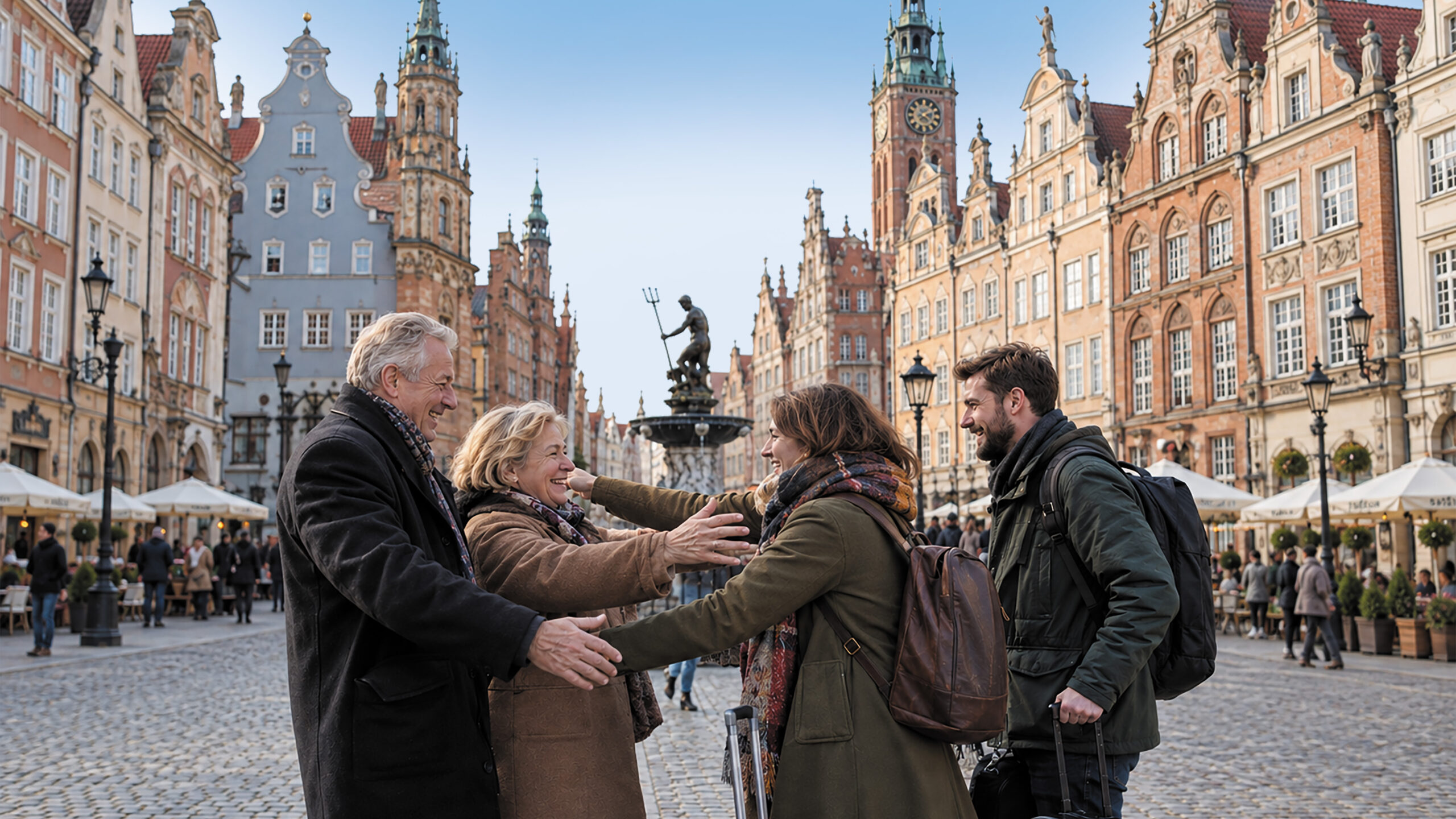
Poland is ceasing to be a country where moving West is the obvious way to improve one’s life. Increasingly, it is becoming an attractive place for people who gained experience in Berlin, London, Dublin, or Amsterdam and are now deciding where they want to build their future.
The historic reversal of the migration balance with Germany is a symbolic sign of that change. On one side is a German economy struggling with weaker growth, industrial challenges, and high energy costs. On the other is Poland, which over the past two decades has steadily narrowed the economic gap with Europe’s wealthiest countries.
Twenty years ago, the difference in opportunities was simply too large for many Poles to ignore. Today, the decision increasingly involves not only salary, but also quality of life, family, living costs, and career prospects.
If Poland can create conditions that encourage people to return for good, it could regain much more than its citizens. It could regain the experience, knowledge, international networks, and entrepreneurial capital that Poles have built over the past two decades in some of the world’s most developed economies.
That would be the real great return: a transformation from a country that exports workers into one capable of attracting its own citizens back home – and turning their international experience into an advantage in the next stage of Poland’s development.