
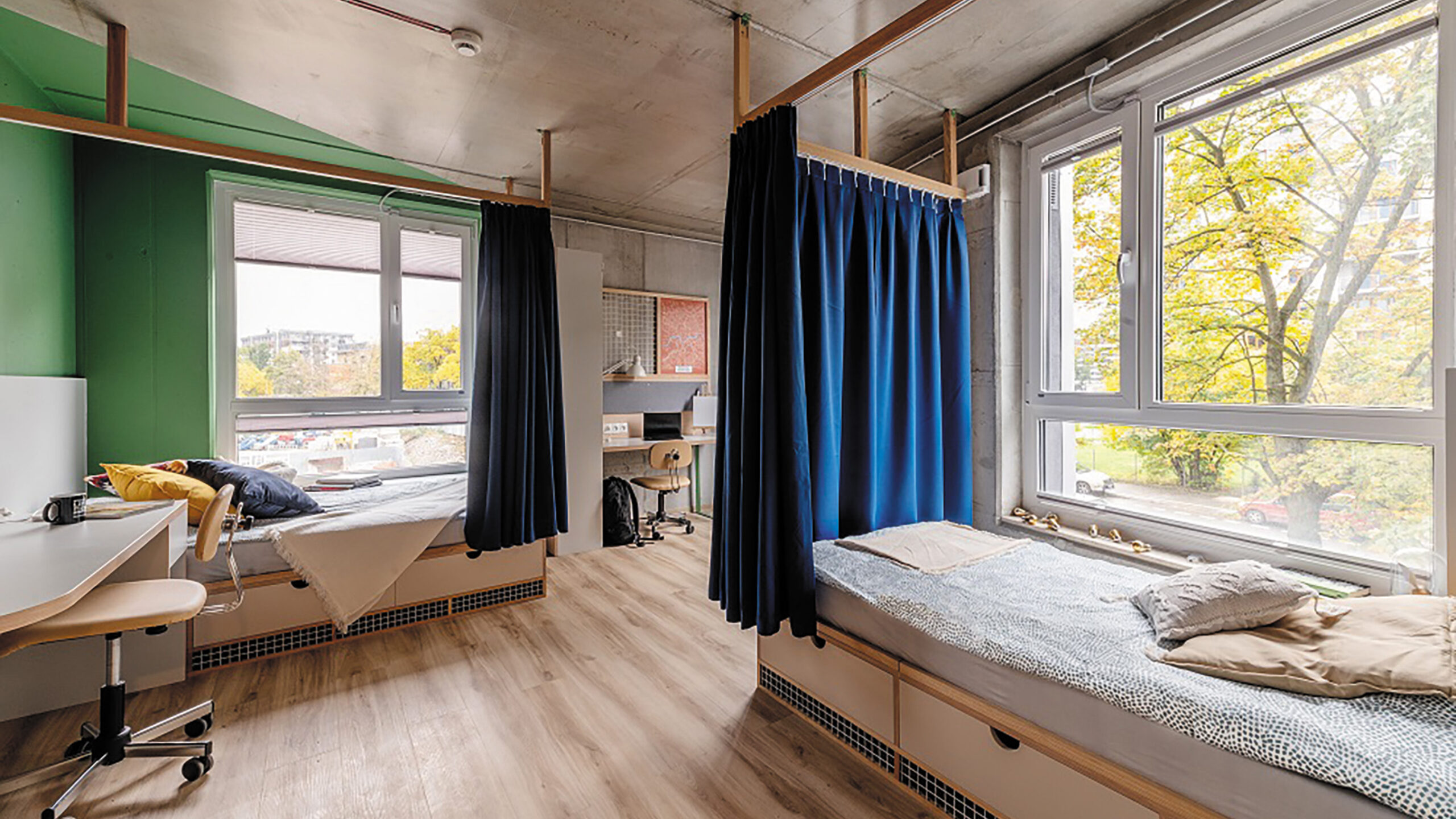
Private Student Housing Holds Enormous Potential. Poland Opens a New Market for Investors
Poland’s private student housing market is entering a phase of rapid growth. A rising student population, the growing popularity of Polish universities among international students, and a significant shortage of modern accommodation are making the PBSA (Purpose-Built Student Accommodation) segment one of the most promising areas for developers and investors in Poland’s real estate market.
According to JLL data, at the end of 2025, Poland had approximately 16,500 beds in private student residences, with another 7,700 under construction or in the pipeline. This is still a relatively small number compared with potential demand. JLL estimates unmet demand for student accommodation at as many as 400,000 beds, approximately 60,000 of them in Warsaw alone.
This enormous gap also represents potential space for new business – from individual development projects to the creation of entire portfolios of professionally managed student residences.
Poland Attracts International Students
One of the most important drivers of the market is the growing international appeal of Polish universities. In the 2024/2025 academic year, 108,600 international students were studying in Poland, accounting for 8.5 percent of the total student population. The largest groups came from Ukraine, Belarus and Türkiye, but Polish universities attracted young people from a total of 179 countries.
For the real estate market, this is particularly significant. Students arriving from abroad are more likely to need ready-to-move-in, well-located and professionally managed accommodation. Modern private student residences are largely designed to meet the needs of this group.
At the same time, the supply of public student housing remains limited. Approximately 115,000 beds in public student residences are sufficient to meet the needs of just 9 percent of all students, while in Warsaw and Poznań the figure is approximately 7 percent.
An Opportunity for Developers and Capital
The market is already responding clearly to this imbalance. In 2025, 3,415 new PBSA beds were delivered, while activity among operators and investors continues to grow steadily. Xior, Student Depot, SHED and StudentSpace are among the operators expanding in the Polish market. Particularly important from an investor’s perspective, the high utilization rates of existing properties confirm the resilience of demand – according to JLL, occupancy at professionally managed private student residences in Poland’s largest university cities exceeds 96 percent.
This is an important signal for developers. The market is no longer based solely on forecasts of future demand. Existing projects are achieving very high occupancy rates, professional operators are already active in the market, and at the same time, the scale of new supply remains small compared with unmet demand.
„The scale of the shortage of student accommodation, particularly in Warsaw, Kraków and Poznań, shows that the development of private student housing is no longer an option but is becoming a necessity. Investors see both operational resilience and long-term growth potential in this segment”, says Krystyna Pietruszyńska, Director, Living Investments at JLL.
The potential is even greater because Poland is only beginning to close the gap with Western Europe. Private student residences currently account for just around 1 percent of student accommodation, compared with 15 percent in the United Kingdom and between 3 and 6 percent in Spain, Germany and the Netherlands.
According to JLL forecasts, the number of beds in private student residences in Poland will increase to approximately 24,000–24,200 by 2030. Even such an increase, however, will not be sufficient to meet existing demand.
For developers and investors, this means a market with considerable room for further growth. The rising number of international students, occupancy rates of more than 96 percent at professionally managed properties, the presence of a growing number of operators and the enormous supply gap mean that private student housing could become not only an answer to a genuine housing problem for students, but also one of the more compelling business models in Poland’s real estate market in the coming years.
Prepared by Jolanta Kontem,
Poland Weekly