
Never a Boaring Moment in Warsaw
Warsaw Zoo’s announcement that it would be looking for donations of acorns in the first week of October came a little late this year. Despite a bumper crop, most of the acorns that fell from the oak in front of our house had already disappeared.
„Acorns are a delicious dietary supplement for our animals”, said the press release from Warsaw’s zoo, whose gates have welcomed visitors in the city’s Praga district since 1928. The zoo residents who will most savour the 1,500 kg haul it hopes to collect from donors are the bison, antelopes, giraffes and monkeys.
The zoo might not have accepted our acorns, which grow by the roadside and absorb some of the traffic fumes. The keepers, however, said gatherers should leave some for wild animals. „They may be a healthy feast for squirrels, jays or even wild boar”.
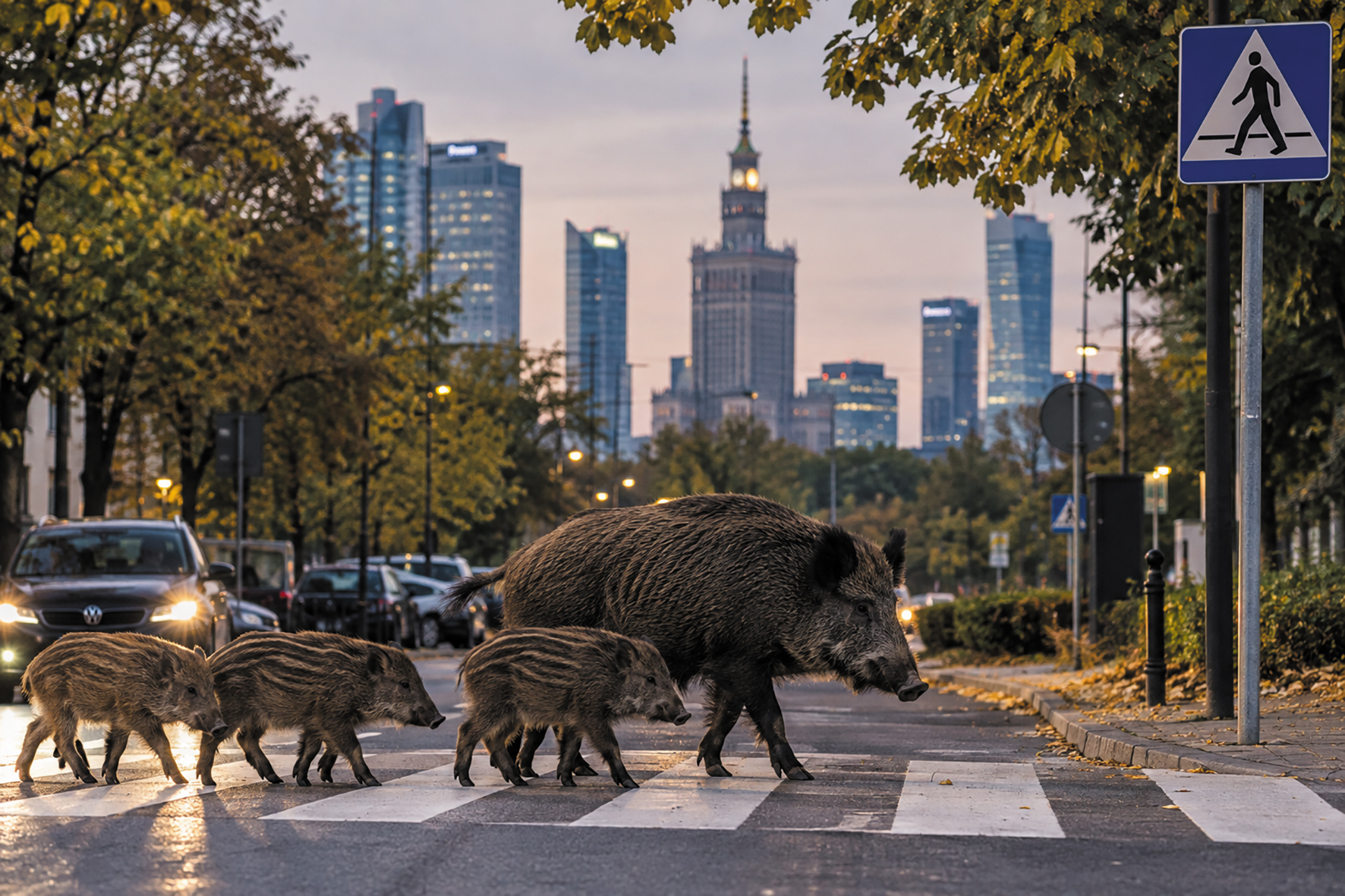
Wild boar? In the suburbs of a large European city? Yes. The population estimated by Warsaw Town Hall at up to 1,500 is growing, with sows having up to 15 piglets three times a year. Ever more daringly they have made their way into the suburbs to forage. And that’s probably why the acorns I have been diligently sweeping to the verge each day have been disappearing.
I noticed that I was also clearing away a carpet of broken husks, which I assumed had been crunched under the soles of passers-by. Then one night my son came home at around one in the morning to find his path to the gate blocked by four large sows scrabbling in the piles of sweepings. Not wanting to engage with these massive hulks, he had to wait for around an hour for them to eat their fill and waddle away leaving a mess behind them.
Reading up on the feeding habits of these beasts, I learnt that to avoid further visits we needed to scrupulously clear the acorns away. Even scraps are enough to tempt them back, and they will dig up the ground in search of them. When I told my sons to roll up their sleeves and help with the endless sweeping, they said „Oh, no, we quite like the wild boar”. I suspect this new-found affection was born out of pure indolence.
Varsovians are divided on the subject of the boar invasion. In August they dug up the local park – Armenian Square, in the Sadyba District and had even been loose in the gardens of the Royal Palace in Wilanów. Packs of them have been filmed on zebra crossings, outside kindergartens and munching on fruit in people’s gardens, breaking down fences. The defenders of the beasts on local Facebook forums like Sadyba24.pl say the boar are fleeing their traditional foraging areas, which are disappearing under bulldozers clearing land for developers.
The boar do not attack people unless provoked and are more likely to run away than charge, goes their defence. The best way of reacting when they are sighted is to keep your distance, according to Warsaw City Council site um.warszawa.pl, especially when the pack includes mothers and piglets. Many of those sounding the alarm are the owners of dogs, which bark at boar, which then charge the dogs, with their owners getting caught up in the struggle.
„Was your dog on a leash?” ask the defenders of the wild beasts. „There are thousands more dog attacks a year than boar attacks”. When alerted on emergency number 19 115, the authorities do react – ideally by tranquillising the beasts and depositing them in the forest out of town. But there have not been any more sightings recently near our house, which makes me think the boar are no more. Many are simply killed to reduce numbers.
I am a fan of Poland’s animal mix. I like the fact that there are lynx, wolves and moose within an hour’s drive of Warsaw in the Kampinos Nature Reserve. And the sighting of a grand, defiant bison at large on the outskirts of Białowieża in the north-east corner of the country is one which will remain with me forever.