Reforming the Future Through Dialogue: How TE Vizja Builds Global Thinkers
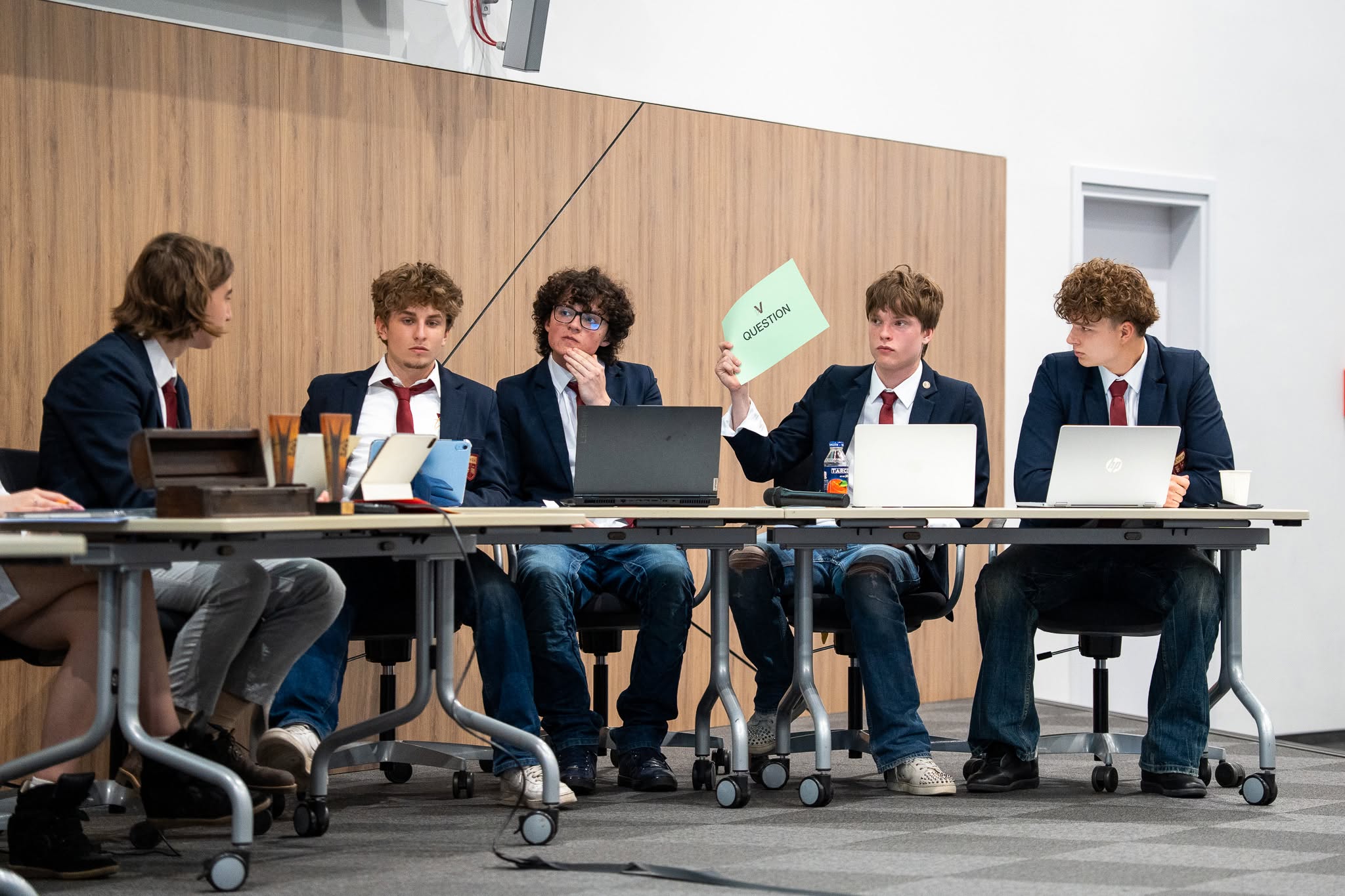
When a group of Warsaw teenagers gathered in Room 234 at Vizja Park last September, they weren’t role-playing for fun. Under the theme “Reforming the Future through Dialogue“, 140 delegates – students from Polish and international schools alike – spent three days negotiating positions and defending national interests entirely in English, across ten committees ranging from the Security Council to global drug policy. The event was TEVMUN25, a Model United Nations conference organised from start to finish by TE Vizja International’s own secondary students. It’s run before and will run again this year. For TE Vizja, a Warsaw-based educational network with campuses across the city and in Gdańsk, this isn’t an occasional add-on; it’s how the school defines international education: a daily practice of thinking, debating, and collaborating across languages.
That international character starts with bilingualism built into the core curriculum, not bolted onto it. Students arrive with widely varying starting levels of English – Polish students and those from abroad alike – so the results are a mark of the school’s whole environment, not a head start: this year’s 8th-grade national exam saw TE Vizja’s four schools post English scores of 93 to 97 per cent against a 73 per cent national average, while this year’s Matura graduates averaged 92 per cent versus 78 per cent nationally.
Those results are a byproduct of a wider climate: at TE Vizja, the Polish Programme runs alongside Cambridge and IB pathways rather than apart from them, and bilingualism is part of daily life for everyone, whichever track a student is on. The Cambridge Pathway itself begins at age five with Cambridge Primary, then runs through Lower Secondary and IGCSE to, at the Mokotów campus, Cambridge International A-Levels – part of the globally recognised Cambridge curriculum used in schools worldwide. Students can also choose the International Baccalaureate Diploma Programme (IB DP), earning a qualification respected by universities from London to Los Angeles without leaving Poland.
TE Vizja’s idea of “international”, though, goes beyond exam boards. Oxford-style debating runs across every campus, from primary school right through to graduation.
Younger students tackle assigned questions – the effect of social media on teenage life was this year’s primary-school final topic, alongside nuclear power and equal pay – while secondary students pick their own, from politics to ethics and the environment. Teachers who coordinate the debates say the exercise teaches students to listen as much as to speak, and to disagree without losing respect for the other side. TE Vizja Centrum recently launched a dedicated Discussion Club for mixed primary and secondary groups, and for the most ambitious debaters, TEVMUN offers a stage for real geopolitical practice.
Taken together, this forms a coherent picture: a school where English is a working language rather than only a subject, and where academic pathways are chosen based on where a student is headed, not a single national track. TE Vizja currently operates preschools, primary schools, and secondary schools in Warsaw and Gdańsk, combining Polish curriculum options with Cambridge IGCSE, Cambridge A-Levels, and IB DP tracks – built for students organising their own UN conferences and debate clubs, practising in real time the dialogue the wider world will eventually ask of them.